The Glory of a Good Old-Fashioned Mud.
There’s something about mud. Not the kind you’re trying to dodge on the school run or wipe off shoes before it gets trampled through the house, but the kind that invites play. The kind that turns into cakes, soups, potions and all sorts of “very important recipes” when given a spoon and a bit of imagination.
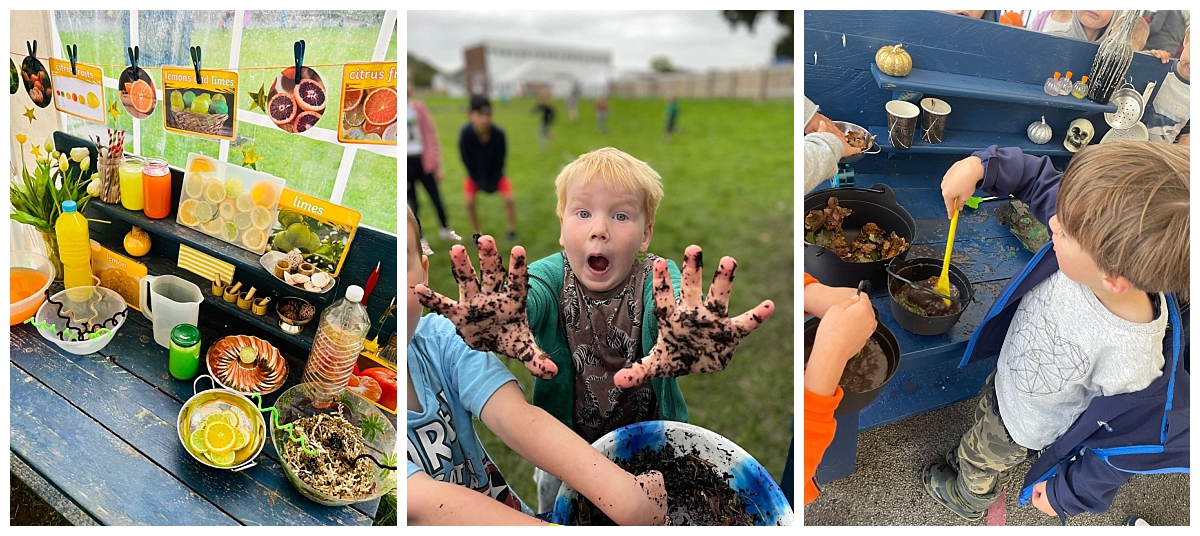
At Practically Family, mud kitchens are a much-loved part of our set-up at our holiday clubs in Stockport. You’ll find them set up in all sorts of ways depending on the theme - bubbling potion stations at Octoberfest, chocolatey mud cake bakeries during Easter Eggstravaganza, and everything in between.
And without fail, they draw children in. They settle, they focus, they create. It’s one of those rare activities that feels simple on the surface but holds their attention in a way that’s hard to replicate.
At its heart, a mud kitchen is simply a space outdoors where children can mix, make and explore using a combination of natural materials and everyday tools.
We may build mud kitchens that even Gordon Ramsey would be impressed by… but it doesn’t need to be over complicated at home. A table, a few old pans, a jug of water and a patch of mud is more than enough to get started. From there, it becomes whatever a child decides it should be. Check out our tips for an at-home mud kitchen below!
Part messy play, part imaginative play, and part real-life role play, it gives children the freedom to experiment without an end goal in mind. There’s no finished product they’re aiming for, no right or wrong way to do it, just the opportunity to explore and create in their own way.
What’s so special about mud kitchens is the way they meet children exactly where they are.
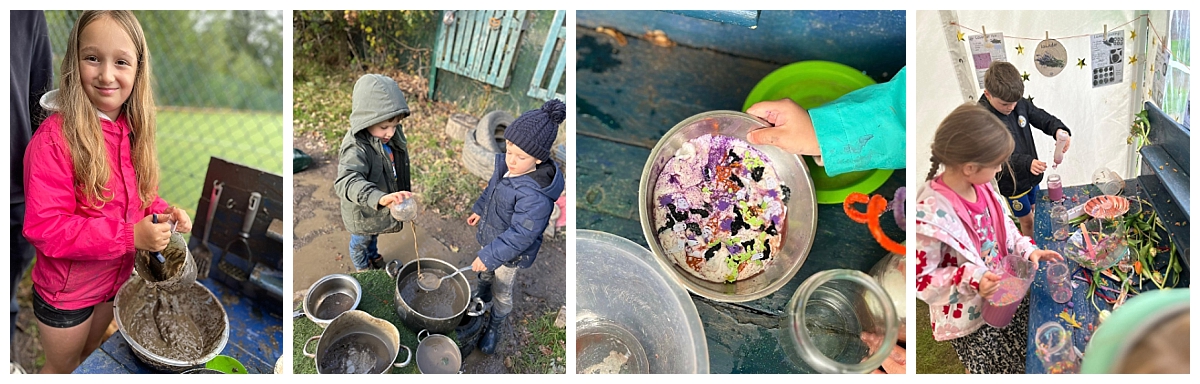
Some will happily stand and stir for long stretches of time, completely absorbed in the process of scooping, pouring and mixing. Others will turn it into a full role play scenario, complete with menus, customers and running commentary. Some will quietly explore the textures and materials, while others will throw themselves into it with full enthusiasm (and usually end up wearing half of it).
It’s inclusive in the truest sense. There’s no barrier to entry, no expectation, and no single way to engage with it. Every child can take something different from the same set-up, which is exactly what makes it work so well.
And while it might look like “just playing in mud,” there’s a lot quietly happening underneath. Children are building strength and coordination as they scoop and pour, experimenting with textures and consistency as they mix mud and water, developing language through conversation and storytelling, and figuring things out as they go along. They’re measuring, estimating, solving little problems and making decisions independently, all within a space that feels entirely their own.
One of the things we love most about mud kitchens is that they don’t need to be overcomplicated to be effective.
The mud in your garden costs nothing, and more often than not, it’s the simplest set-ups that lead to the richest play. Add a bit of water, a handful of leaves or petals, maybe a few sticks or stones, and suddenly you’ve got the beginnings of something that can keep children happily occupied – although we can’t promise their toys won’t end up in the mud too… dinosaurs love mud volcanoes!
But, there’s something about working with natural materials that invites curiosity. Children notice things they might otherwise overlook - the way mud changes when you add more water, how it feels between their fingers, how it smells, how it behaves when you try to pour it or shape it.
And because there’s no fixed outcome, they’re free to experiment, to change their minds, to start again, and to follow their own ideas wherever they lead. It’s learning in its most natural form, but it never feels like learning to them.
If you’re thinking about bringing a mud kitchen into your own garden, the good news is that you really don’t need much to get started.
Choose a Space That Can Get Messy
Start with a spot where you’re happy for things to get a little muddy. A corner of the garden, a patio area you can wash down, or even a large tray set on a table can work perfectly well. Giving children a space where the mess is expected (and accepted) makes all the difference.
Gather a Few Simple Kitchen Bits
Old pots, pans, mixing bowls, wooden spoons and jugs are ideal. Anything you’re happy to get a little messy! (not mum’s favourite tea pot…)
Let Nature Do the Heavy Lifting
Mud and water are your base ingredients, but you can build on this with whatever you have to hand - leaves, twigs, flowers, stones, even a bit of coloured sand. Changing what’s available with the seasons can keep things feeling fresh without needing to buy anything new.
Keep It Open and Child-Led
It can be tempting to suggest what they might make, but often the most engaging play happens when children are left to lead. One day it might be a bakery, the next a potion lab, and the day after something entirely unexpected. Giving them that freedom is what allows their imagination to really take hold.
Prepare for Mess
Old clothes, wellies, and perhaps a towel or two nearby will make life easier. A sponge, a quick rinse, and a warm bath at the end of the day usually does the trick. It’s all part of the experience, and in our view, very much worth it.
Mud kitchens are a regular feature across our holiday clubs in Cheadle Hulme and Bramhall in Stockport. So, if you love the idea of messy play, but would rather not have it at home… well, you know where we are!
Discover all about our Holiday Clubs right here and make sure to sign up to our newsletter, packed full of family activities, genius hacks and creative ideas to keep kids happy, entertained and inspired.
And without fail, they draw children in. They settle, they focus, they create. It’s one of those rare activities that feels simple on the surface but holds their attention in a way that’s hard to replicate.
So… What Is a Mud Kitchen?
At its heart, a mud kitchen is simply a space outdoors where children can mix, make and explore using a combination of natural materials and everyday tools.
We may build mud kitchens that even Gordon Ramsey would be impressed by… but it doesn’t need to be over complicated at home. A table, a few old pans, a jug of water and a patch of mud is more than enough to get started. From there, it becomes whatever a child decides it should be. Check out our tips for an at-home mud kitchen below!
Part messy play, part imaginative play, and part real-life role play, it gives children the freedom to experiment without an end goal in mind. There’s no finished product they’re aiming for, no right or wrong way to do it, just the opportunity to explore and create in their own way.
Why Children Love Them (and Why We Do Too)
What’s so special about mud kitchens is the way they meet children exactly where they are.
Some will happily stand and stir for long stretches of time, completely absorbed in the process of scooping, pouring and mixing. Others will turn it into a full role play scenario, complete with menus, customers and running commentary. Some will quietly explore the textures and materials, while others will throw themselves into it with full enthusiasm (and usually end up wearing half of it).
It’s inclusive in the truest sense. There’s no barrier to entry, no expectation, and no single way to engage with it. Every child can take something different from the same set-up, which is exactly what makes it work so well.
And while it might look like “just playing in mud,” there’s a lot quietly happening underneath. Children are building strength and coordination as they scoop and pour, experimenting with textures and consistency as they mix mud and water, developing language through conversation and storytelling, and figuring things out as they go along. They’re measuring, estimating, solving little problems and making decisions independently, all within a space that feels entirely their own.
The Magic Behind a Mud Kitchen
One of the things we love most about mud kitchens is that they don’t need to be overcomplicated to be effective.
The mud in your garden costs nothing, and more often than not, it’s the simplest set-ups that lead to the richest play. Add a bit of water, a handful of leaves or petals, maybe a few sticks or stones, and suddenly you’ve got the beginnings of something that can keep children happily occupied – although we can’t promise their toys won’t end up in the mud too… dinosaurs love mud volcanoes!
But, there’s something about working with natural materials that invites curiosity. Children notice things they might otherwise overlook - the way mud changes when you add more water, how it feels between their fingers, how it smells, how it behaves when you try to pour it or shape it.
And because there’s no fixed outcome, they’re free to experiment, to change their minds, to start again, and to follow their own ideas wherever they lead. It’s learning in its most natural form, but it never feels like learning to them.
Our Top 5 Tips for Creating a Mud Kitchen at Home
If you’re thinking about bringing a mud kitchen into your own garden, the good news is that you really don’t need much to get started.
Choose a Space That Can Get Messy
Start with a spot where you’re happy for things to get a little muddy. A corner of the garden, a patio area you can wash down, or even a large tray set on a table can work perfectly well. Giving children a space where the mess is expected (and accepted) makes all the difference.
Gather a Few Simple Kitchen Bits
Old pots, pans, mixing bowls, wooden spoons and jugs are ideal. Anything you’re happy to get a little messy! (not mum’s favourite tea pot…)
Let Nature Do the Heavy Lifting
Mud and water are your base ingredients, but you can build on this with whatever you have to hand - leaves, twigs, flowers, stones, even a bit of coloured sand. Changing what’s available with the seasons can keep things feeling fresh without needing to buy anything new.
Keep It Open and Child-Led
It can be tempting to suggest what they might make, but often the most engaging play happens when children are left to lead. One day it might be a bakery, the next a potion lab, and the day after something entirely unexpected. Giving them that freedom is what allows their imagination to really take hold.
Prepare for Mess
Old clothes, wellies, and perhaps a towel or two nearby will make life easier. A sponge, a quick rinse, and a warm bath at the end of the day usually does the trick. It’s all part of the experience, and in our view, very much worth it.
A Little Bit of Holiday Club Magic, at Home
Mud kitchens are a regular feature across our holiday clubs in Cheadle Hulme and Bramhall in Stockport. So, if you love the idea of messy play, but would rather not have it at home… well, you know where we are!
Discover all about our Holiday Clubs right here and make sure to sign up to our newsletter, packed full of family activities, genius hacks and creative ideas to keep kids happy, entertained and inspired.
Practically Family
07939 942334 (during Holiday Club weeks only)